AIR QUALITY & HAZARDOUS GAS
This page discusses common gas and particle exposures associated with farming operations. Hazardous gases can accumulate on farms in confined spaces such as silos, manure storages, anaerobic digesters, grain bins, and poorly ventilated barns, compromising air quality and posing risks to life.

Page Topics
Click on a topic below to jump to that section on this page.
Selecting Respiratory Protection for Air Quality & Gas Hazards
Before performing a task on the farm, determine if there are any air quality or gas hazards that may be encountered. Once the gas, vapor, or dust hazards have been identified, you can begin to determine the respiratory protection needed.
Criteria for Selecting Respirators:
-
- General use conditions, including determination of contaminant(s);
- Physical, chemical, and toxicological properties of the contaminant(s);
- NIOSH recommended exposure limit (REL), OSHA permissible exposure limit (PEL), American Conference of Governmental Industrial Hygienists (ACGIH) Threshold Limit Value (TLV);
- Expected concentration of each respiratory hazard;
- Immediately dangerous to life or health (IDLH) concentration;
- Oxygen concentration or expected oxygen concentration;
- Eye irritation potential; and
- Environmental factors, such as presence of oil aerosols or organic dust
Follow the below steps as a general guide for selection of respiratory protection:
Carbon Monoxide
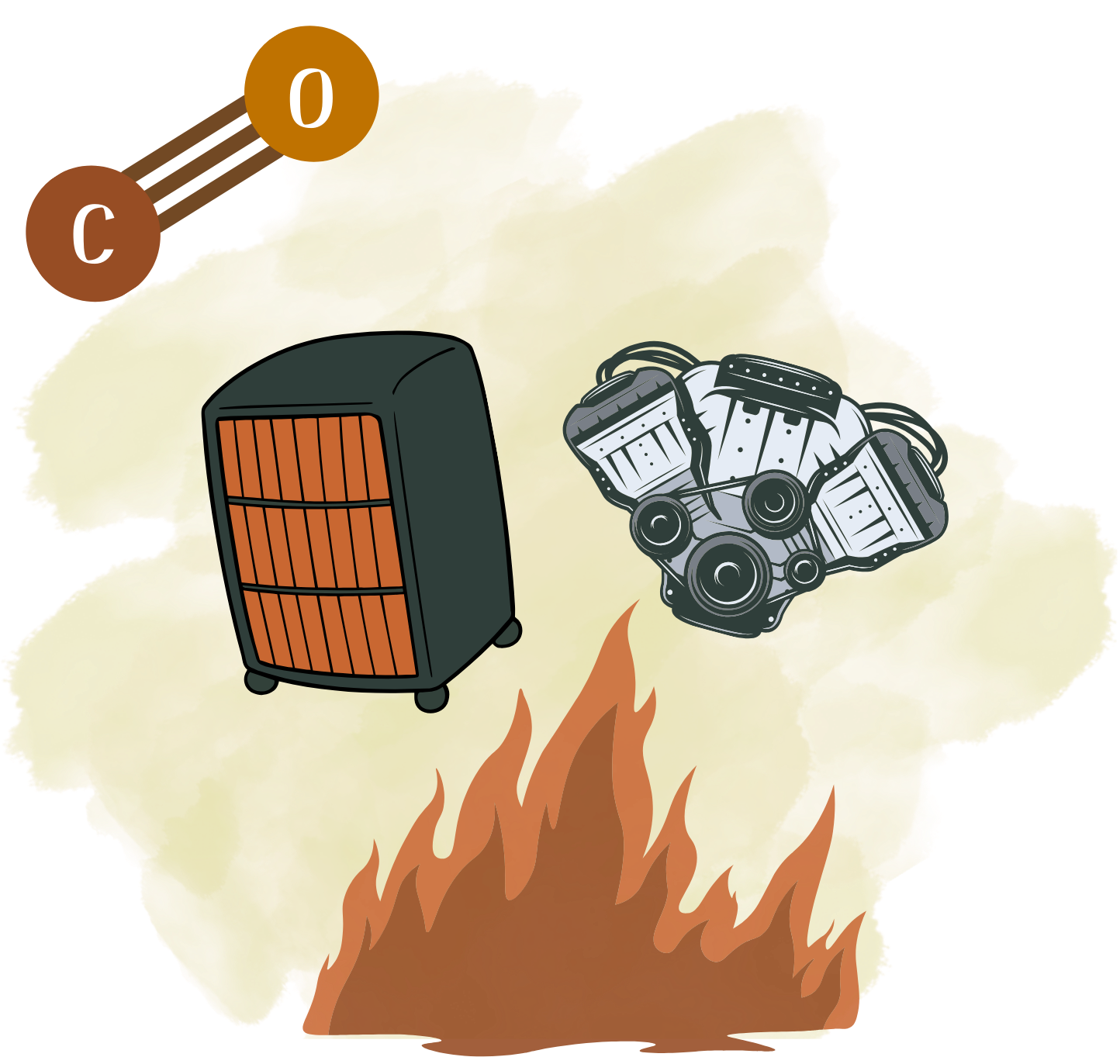
Carbon monoxide (CO) is a colorless, odorless gas that can be generated both on the farm and in the home. At high concentrations, CO can cause asphyxiation or stop your brain from getting good oxygen exchange with your blood. Understanding the signs and symptoms of exposure and where it is generated are both important to preventing death in the community. In the United States, around 430 people die from accidental carbon monoxide poisoning, and 50,000 people visit the emergency room every year because of exposure to carbon monoxide.
Signs and Symptoms
Exposure Routes: Inhalation, skin and/or eye contact
Low Concentrations (<9 ppm): Comfortable living concentration.
-
- NIOSH REL-TWA: 35 ppm (8-hour allowable)
- OSHA PEL-TWA: 50 ppm
Medium Concentrations (200 ppm): Headache, dizziness, nausea in 2 hours.
High Concentrations (400 ppm): Life threatening in 3 hours.
-
- IDLH: 1200 ppm
Sources
Any combustion process has the possibility of creating Carbon Monoxide. Using gas or diesel engines indoors can create an environment that is considered an oxygen deficient atmosphere.
-
- Gas-Fired Heaters (combustion byproducts)
- Inside Grain Bins (out-of-condition grain; gas-fired dryers)
- Grain Bin Equipment (overheated equipment; smoldering product)
Activity: Using gas or diesel engine indoors (power-washing, skid loader, etc.)
Respiratory Protection
NOTE: No air purifying respirator is effective. Ventilate the area and use:
Self-Contained Breathing Apparatus (SCBA)
Resources for Carbon Monoxide
-
- Carbon Monoxide in Grain Storage Structures [Poster] – Confined Space Safety: Grain Storage Structure Entry Procedures
- Carbon Monoxide in Manure Storage [Poster] – Confined Space Safety: Steps for Entry into Manure Storage
Carbon Dioxide
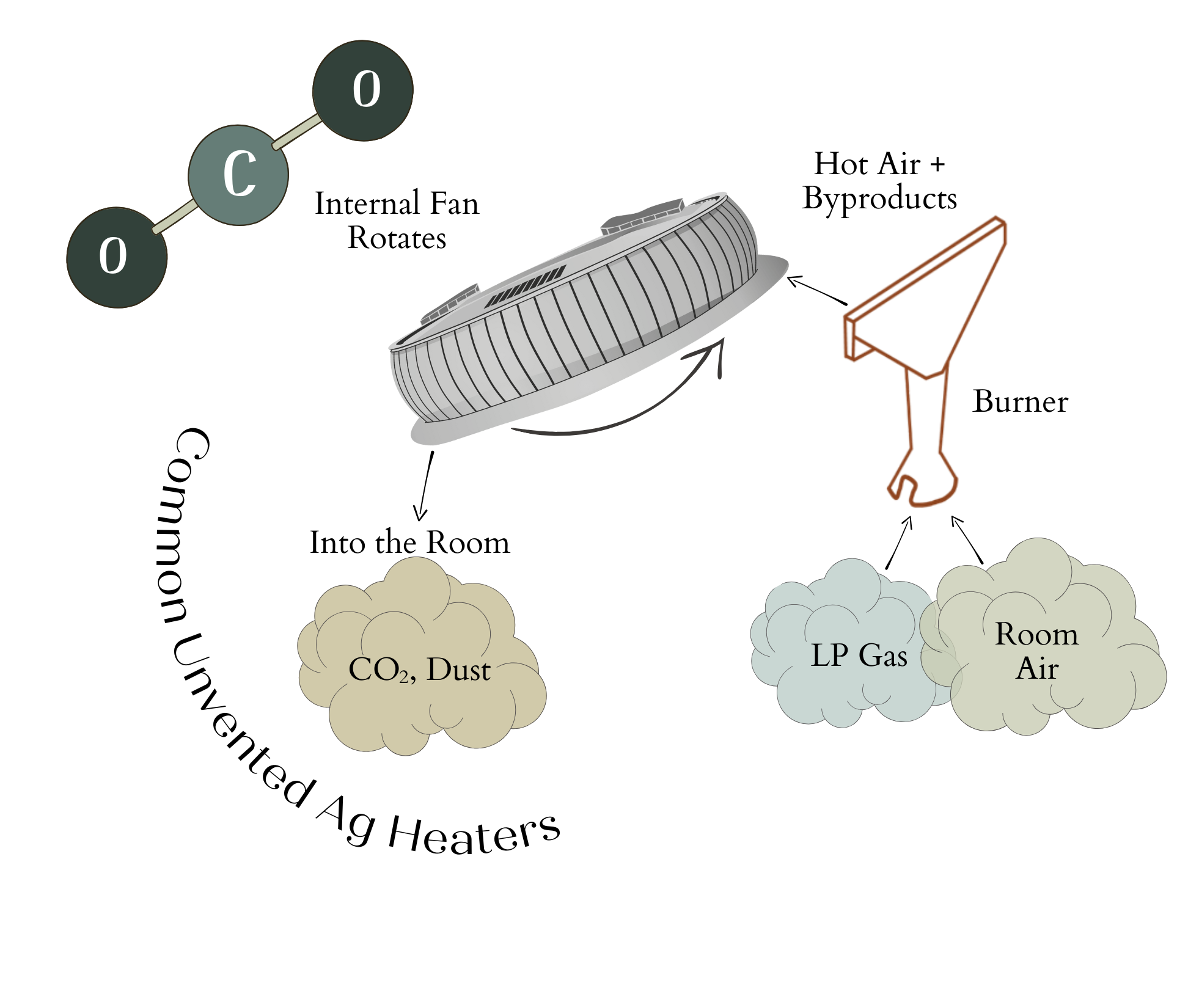
Carbon dioxide (CO2) is a colorless, odorless gas produced by the respiration of plants and animals, as well as from open-flame, non-vented space heaters. It is denser than air and can accumulate in areas such as animal pens, manure tanks, and silos, posing a risk of oxygen deficiency which can lead to asphyxiation. While well-ventilated livestock buildings typically do not have harmful CO2 levels, dangerous concentrations may occur in sealed silos, liquid manure storages, and grain storages.
High levels of carbon dioxide can cause drowsiness, dizziness, and trouble concentrating. As concentrations increase, it could cause elevated heart rate, elevated blood pressure, asphyxia, and convulsions at extremely high concentrations.
Signs and Symptoms
Exposure Routes: Inhalation, skin and/or eye contact
Low Concentrations (600-1000 ppm): Muscle stiffness
Medium Concentrations (1000-2500 ppm): Labored breathing, drowsiness and headache.
-
- NIOSH REL: 5000 ppm (8-hour maximum)
High Concentrations (30,000 ppm or 3%): Increased pulse rate, nausea, impairment. Can displace enough oxygen to cause death by suffocation.
Sources
Carbon dioxide gas is heavier than air – it can settle near the bottom of the manure pit.
-
- Gas-Fired Heaters (combustion byproducts)
- Animals (exhaled breath)
- Inside Grain Bins (out-of-condition grain; gas-fired dryers)
- Grain Bin Equipment (overheated equipment; smoldering product)
- Silos (naturally fermenting silage)
- Product of decomposition
Activity:
Control Measures:
Respiratory Protection
Resources for Carbon Dioxide
Nitrogen Dioxide
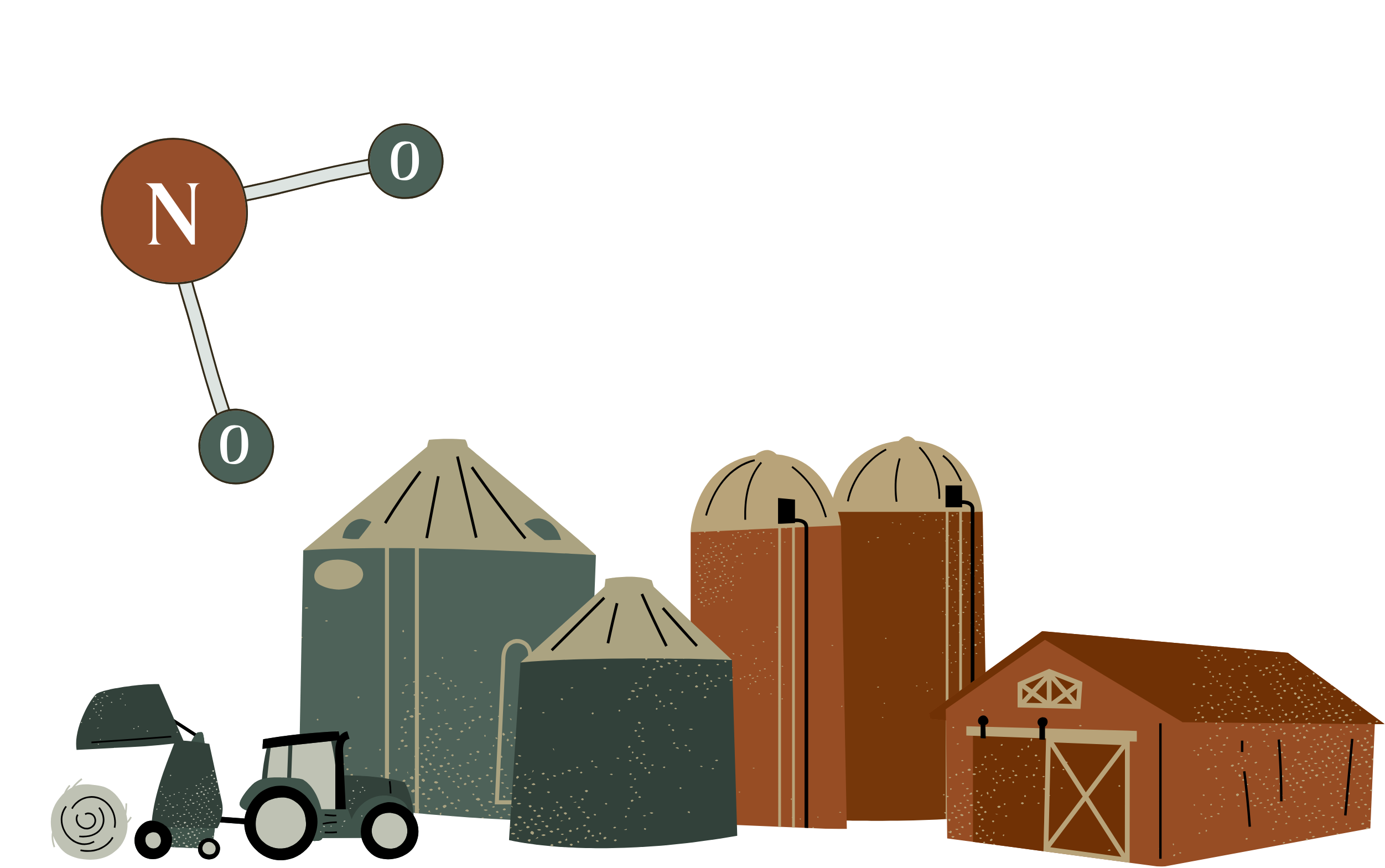
Nitrogen dioxide (NO2) is a hazardous asphyxiant produced as a result of chemical reactions that take place almost immediately after plant material is placed into a silo, posing a risk of sudden death even with short-term exposure. It has a bleach-like odor and appears as a reddish-brown haze, being denser than air and often accumulating above the silage surface. Weather conditions and agricultural practices influence nitrate levels in plants, leading to NO2 production in silos. For instance, a dry growing season followed by heavy rainfall can cause corn to absorb high nitrate levels, which, if harvested prematurely, leads to the generation of NO2 through chemical reactions.
Signs and Symptoms
Medium Concentrations (1-4 ppm): Changes in respiratory function and pulmonary pathology.
High Concentrations (50 ppm): Progressive respiratory injury; possible death.
Sources
-
- Silos (naturally fermenting silage)
Activity: Entry into a non-air tight silo
Control Measures:
Respiratory Protection
NOTE: Do not enter for at least 10-14 days after filling without running blowers for at least 30 minutes, monitoring nitrogen oxide levels to assure nontoxic levels and wearing SCBA if elevated levels are present.
Self-Contained Breathing Apparatus (SCBA)
Resources for Nitrogen Dioxide
Hydrogen Sulfide
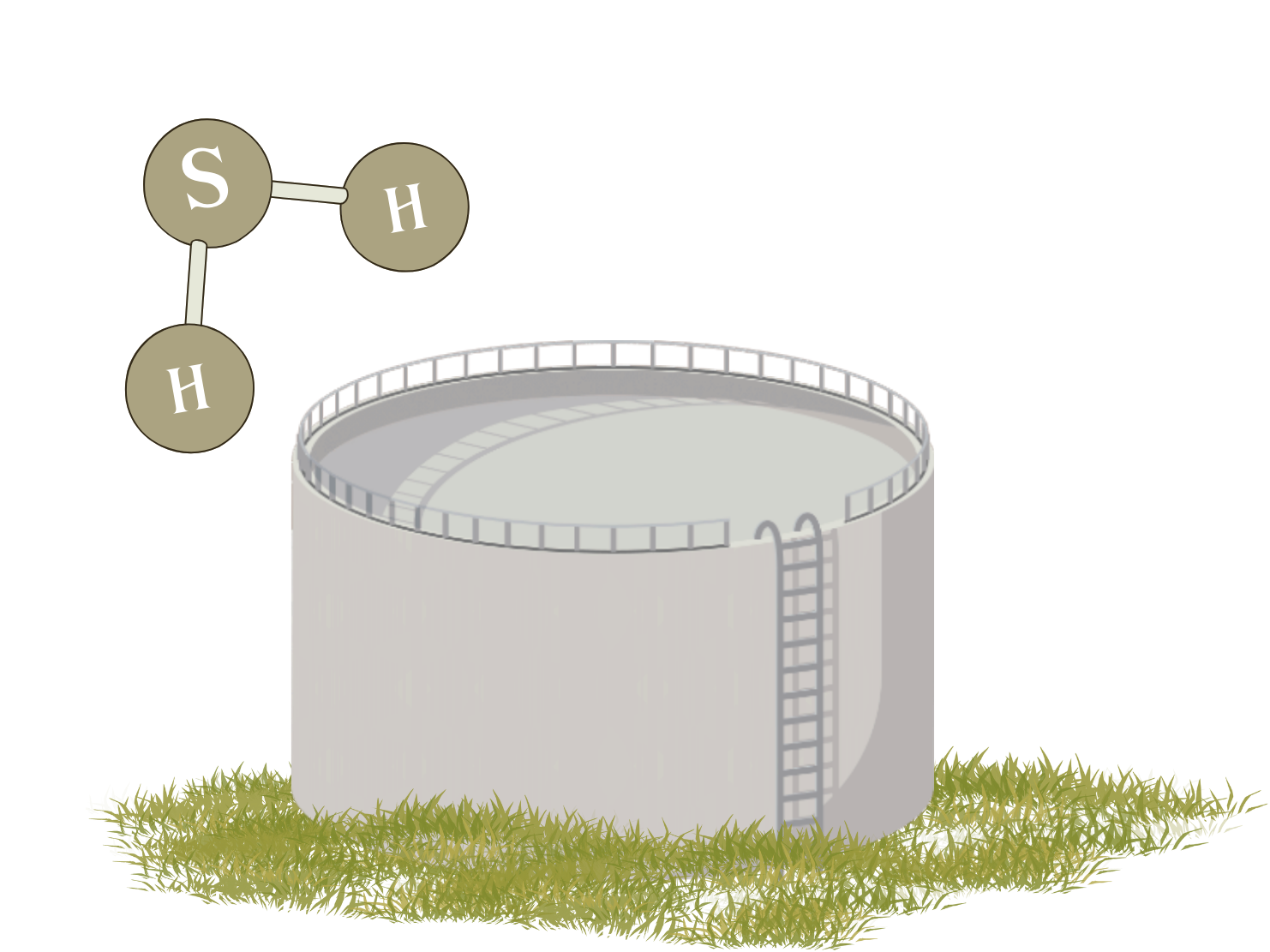
Hydrogen sulphide (H2S) is the most dangerous of the manure gases. It is classified as a chemical asphyxiant because it immediately chemically interacts with the blood’s hemoglobin to prevent oxygen from being carried to the body’s vital organs and tissues. It is produced from the anaerobic decomposition of organic materials such as manure. Its characteristic rotten egg smell is easy to detect at low concentrations, but at higher concentrations, H2S paralyzes the sense of smell.
Signs and Symptoms
Hydrogen sulfide attacks the eyes and is a severe eye irritant that may cause tissue damage.
Low Concentrations (2-20 ppm): Dizziness, headache, nausea and irritation of respiratory tract.
High Concentrations (500-700 ppm): Unconsciousness, respiratory failure and death within minutes.
NOTE: Hydrogen sulfide may be explosive at a wide range of concentrations in air – 4.3% – 46% by volume.
Sources
Hydrogen sulfide gas is heavier than air – it can settle near the bottom of the manure pit.
-
- Manure Storage (under slatted floor; outside lagoon, pit or tank)
- Manure Pumping (under slatted floor; outside lagoon, pit or tank)
- Manure Agitation
- Foaming Manure
Activity: Livestock and Poultry Confined Animal Feeding Operation (CAFO)
Respiratory Protection
NOTE: Restrict entry, ventilate area
Supplied Air Respirator
*Also referred to as “Airline Respirator”
Self-Contained Breathing Apparatus (SCBA
Resources for Hydrogen Sulfide
-
- GPCAH Manure Gas Topic Page [Webpage]: Manure Gas Safety
- Hydrogen Sulfide in Grain Storage Structures [Poster] – Confined Space Safety: Grain Storage Structure Entry Procedures
- Hydrogen Sulfide in Manure Storage [Poster] – Confined Space Safety: Steps for Entry into Manure Storage
- Response to Hydrogen Sulfide Concentrations [Poster]: Gas Monitor Use
Ammonia
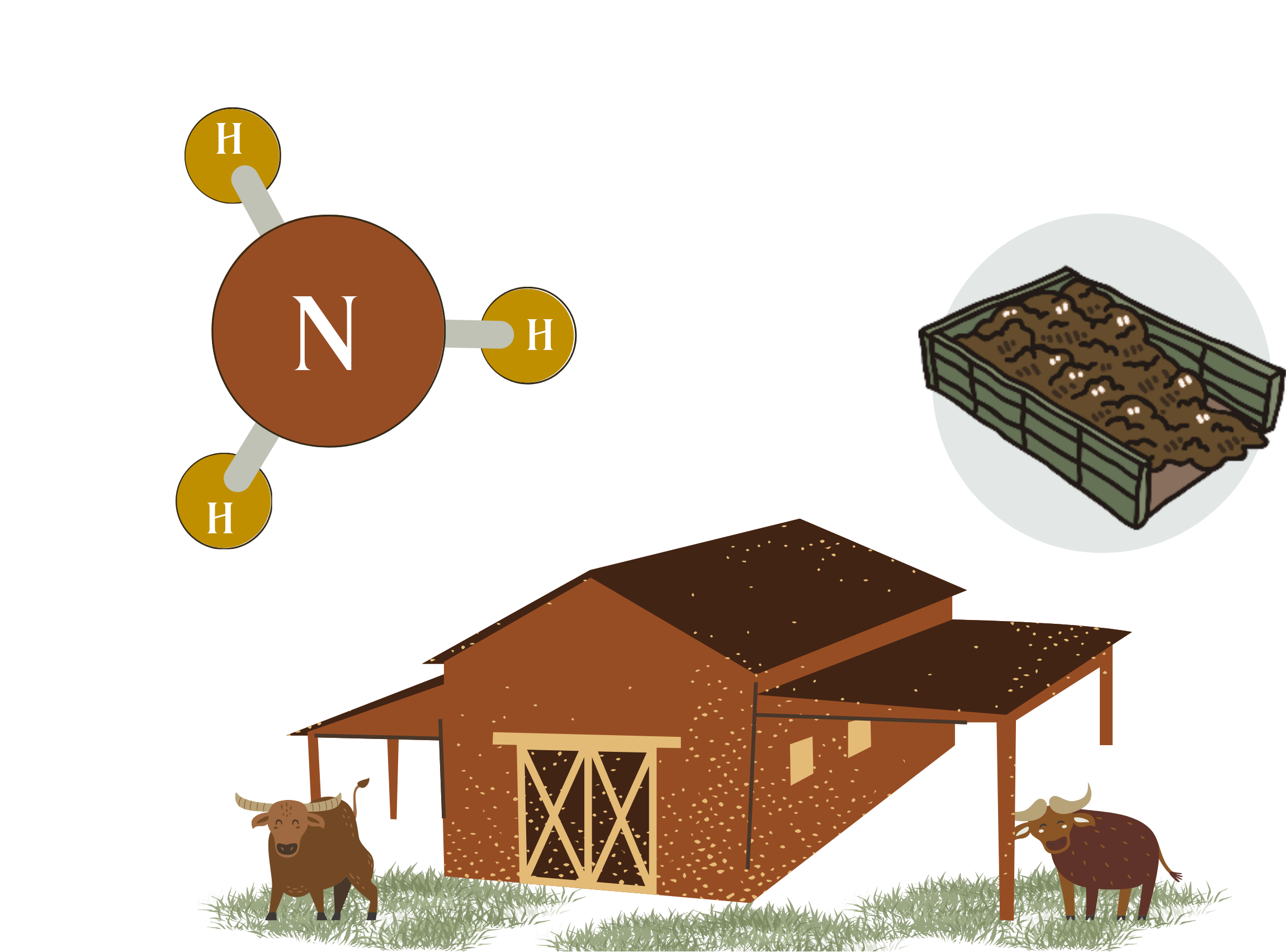
Ammonia (NH3) is a colorless gas with a strong odor, produced by the decomposition of nitrogen compounds in animal manures. It is classified as an irritant and may cause respiratory diseases in livestock if exposed to high levels for long periods. Eye irritation occurs at 20–50 ppm, varying by sensitivity. Ammonia is primarily a concern in swine and poultry facilities, as well as in manure composting. Improving ventilation is advised if eye irritation is observed in livestock or humans.
Signs and Symptoms
Exposure Routes: Inhalation, ingestion, skin or eye contact
Low Concentrations (5-20 ppm): Odor, eye irritation
Medium Concentrations (20-50 ppm): Moderate irritation of the eyes, nose and throat; breathing difficulty, wheezing, chest pain.
-
- NIOSH PEL: 30 ppm
- OSHA PEL: 50 ppm
High Concentrations (2500 ppm): Chemical pneumonitis, pulmonary edema, pink frothy sputum, cyanosis; skin burns, vesiculation; death. Liquid Ammonia: frostbite.
-
- IDLH: 300 ppm
Sources
Ammonia gas is lighter than air.
-
- Manure Storage (under slatted floor; outside lagoon, pit or tank)
- Manure Pumping (under slatted floor; outside lagoon, pit or tank)
- Foaming Manure
- Anhydrous Ammonia
Activities: Livestock and Poultry Confined Animal Feeding Operation (CAFO); Anhydrous Ammonia field application
Control Measures: Ventilation if eye irritation is observed in humans or livestock
Respiratory Protection
N95 Filtering Facepiece Respirator (FFR): If Ammonia concentrations are reasonably low (<10 ppm).
-
- Examples of Use: Inside animal housing
Half-Mask Respirator with Filtration: Needed if both Ammonia and dust are present and need to be controlled for.
*Also referred to as “Half-Mask Face Piece”, “Cartridge Respirator”
-
- Ammonia Gas Cartridge/Canister (Green)
- Filtration: N or P prefilter (P100 Filter)
- Examples of Use: Inside animal housing; Anhydrous Ammonia field application (must protect skin and eyes if using half face piece)
Full Facepiece Respirator: Wear if Ammonia concentrations are high (>50 ppm).
-
- Ammonia Gas Cartridge/Canister (Green)
- Examples of Use: Anhydrous Ammonia application
Resources for Ammonia
-
- Ammonia in Manure Storage [Poster] – Confined Space Safety: Steps for Entry into Manure Storage
- Preparation, Application, PPE [Poster] – Anhydrous Ammonia: Farmer Safety Check
Methane
Methane (CH4) is a colorless, odorless, non-toxic, and combustible gas produced from the anaerobic digestion of organic material. When stored correctly, it serves as a fuel for internal combustion engines or can be cleaned for use in the natural gas grid. Being lighter than air, it tends to rise from manure storage. In well-ventilated areas, methane poses little risk, but in covered storage, it can become concentrated and reach explosive levels.
Signs and Symptoms
Exposure Routes: Inhalation, skin and/or eye contact (liquid)
Low Concentrations (1000 ppm or <0.1%): Not harmful
- NIOSH REL: 1000 ppm
- OSHA PEL: 1000 ppm
Medium Concentrations (10,000 ppm or <1%): No known toxicity.
- IDHL: 2100 ppm (10% LEL)
High Concentrations (50,000 ppm or <5%): Explosive. Dizziness, confusion, excitation, asphyxia. Liquid: Frostbite.
-
- IDLH: 300 ppm
Sources
Methane gas is lighter than air – occurs near the top of manure pits. Expect methane to be present in manure pits.
-
- Manure Storage (under slatted floor; outside lagoon, pit or tank)
- Manure Pumping (under slatted floor; outside lagoon, pit or tank)
- Foaming Manure (if foaming manure is present, significant Methane risk)
Activity: Livestock and Poultry Confined Animal Feeding Operation (CAFO)
Control Measures: Methane is an explosion hazard, make sure to prevent sparks when concentrations are detected and ventilate the area.
Respiratory Protection
NOTE: Ventilate area
Supplied Air Respirator:
*Also referred to as “Airline Respirator”
Self-Contained Breathing Apparatus (SCBA):
Resources for Methane
-
- GPCAH Manure Gas Topic Page [Webpage]: Manure Gas Safety
- Response to Methane Concentrations [Poster]: Gas Monitor Use

Organic Dusts
More information about organic dusts.
Sources
-
- Feed or grain dust
- Mold
- Spores
- Animal dander
Activities:
-
- Livestock and Poultry Confined Animal Feeding Operation (CAFO)
- Grain Handling: Silo or bin unloading
Respiratory Protection
Filtering Facepiece Respirator (FFR):
-
- Filtration: N, R, or P series
Half-Mask Respirator with Filtration: Wear with the correct cartridge or canister if hazardous gas or vapors are also present.
*Also referred to as “Half-Mask Face Piece”, “Cartridge Respirator”
-
- Filtration: N or P series
Full Facepiece Respirator: Wear with the correct cartridge or canister if hazardous gas or vapors are also present and eye/skin protection is needed.
-
- N or P series
Powered Air-Purifying Respirator (PAPR):
-
- Filtration: HEPA Filter
Resources for Organic Dusts
-
- Organic Dusts in Grain Storage Structures [Poster] – Confined Space Safety: Grain Storage Structure Entry Procedures

Additional Respiratory Protection Resources
Additional information for selection of respiratory protection can be found in the resources below.
-
- For more information on general use of respirators, visit the GPCAH PPE Resources topic page.
- For common respirators used in agriculture, visit the Ag Safety Alliance page
Additional Resources: Air Quality & Hazardous Gas
Print Materials
Air Quality & Gas Exposures Poster
Dimensions: 11×17
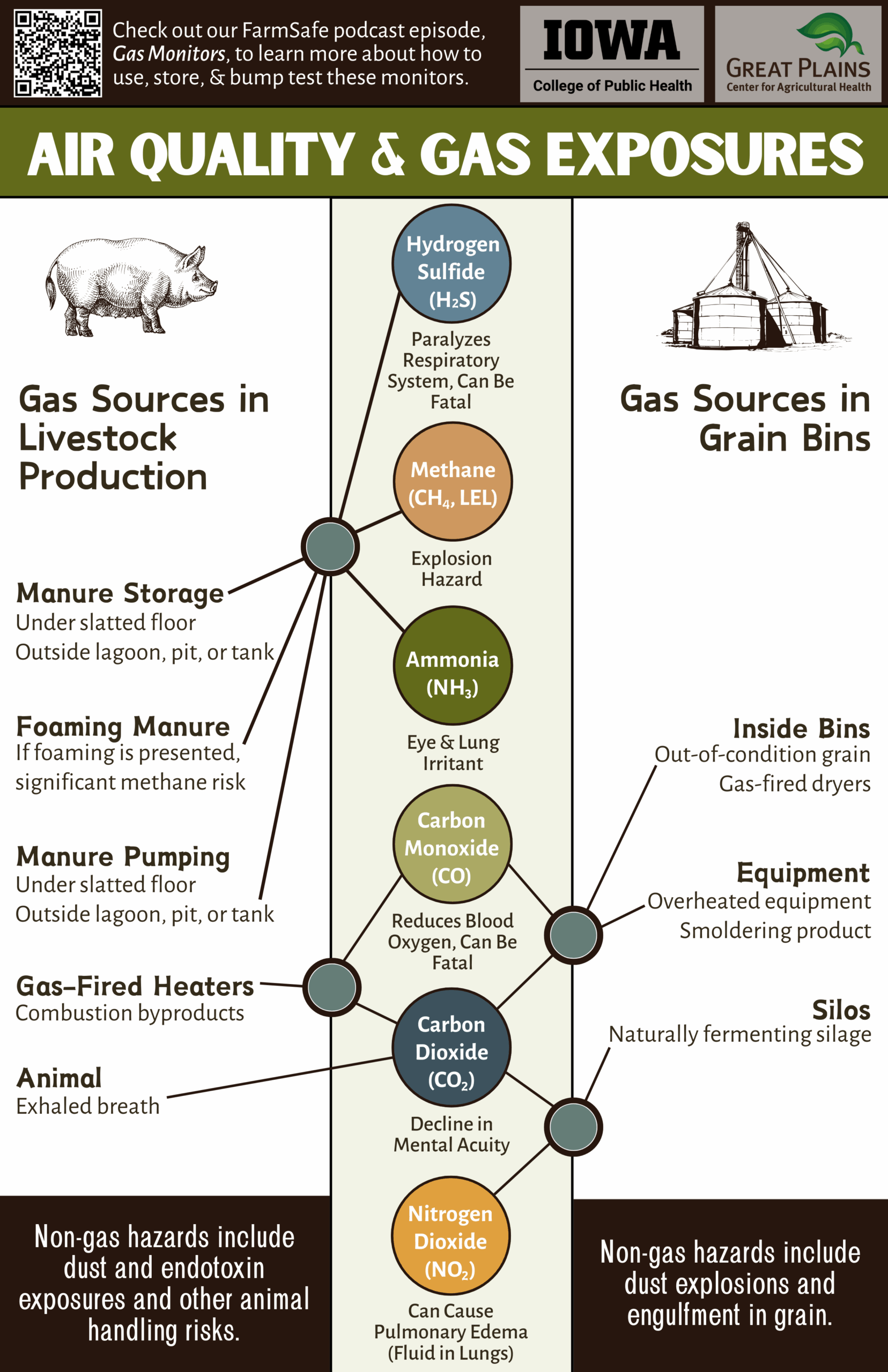
This poster presents a detailed overview of air quality hazards in livestock and grain production, categorizing them by source and type. In livestock environments, significant risks include methane and ammonia emissions from manure handling systems such as slatted floors, lagoons, pits, and tanks—especially when manure is foaming—along with gases produced by animals and combustion byproducts from gas-fired heaters. Grain production hazards include toxic gas emissions from out-of-condition grain, gas-fired dryers, overheating equipment, and silos containing fermenting silage, which can produce dangerous gases like carbon monoxide, nitrogen dioxide, carbon dioxide, and hydrogen sulfide.
Beyond gases, the poster also highlights non-gas hazards such as dust, endotoxins, animal handling risks, and the dangers of grain engulfment and dust explosions. Health impacts from these exposures range from eye and lung irritation to paralysis, respiratory damage, reduced mental function, and death. To mitigate these risks, the poster stresses the importance of properly using and maintaining gas monitors and refers to a FarmSafe podcast episode for further guidance. The message underscores the need for proactive safety practices in managing air quality hazards across agricultural operations.
Air Quality & Gas Exposures Handout
Dimensions: 8.5×11
A handout version of the Air Quality & Gas Exposures Poster. This handout can be used in the field when discussing gas sources in livestock production and grain bins, and the associated hazards with agricultural workers. It can also be used in the classroom as a teaching aid, helping students visualize which gas sources in agriculture are associated with which hazardous exposures.
Ag Health 101
Unit 5. Air Quality & Gas Exposures on the Farm
This section of the Ag Health 101 course focuses on different airborne contaminants that are generated by farming operations.
Information from Unit 5. Air Quality & Gas Exposures on the Farm was used to create the poster, “Air Quality & Gas Exposures” (above). Listen to the audio lessons from Unit 5 of Ag Health 101, or view the Unit Summary pages on Air Quality & Gas Exposures, for more information on this topic.