
FALL PREVENTION
Fall Risks & Prevention Tips: Print Materials
Poster/Handout
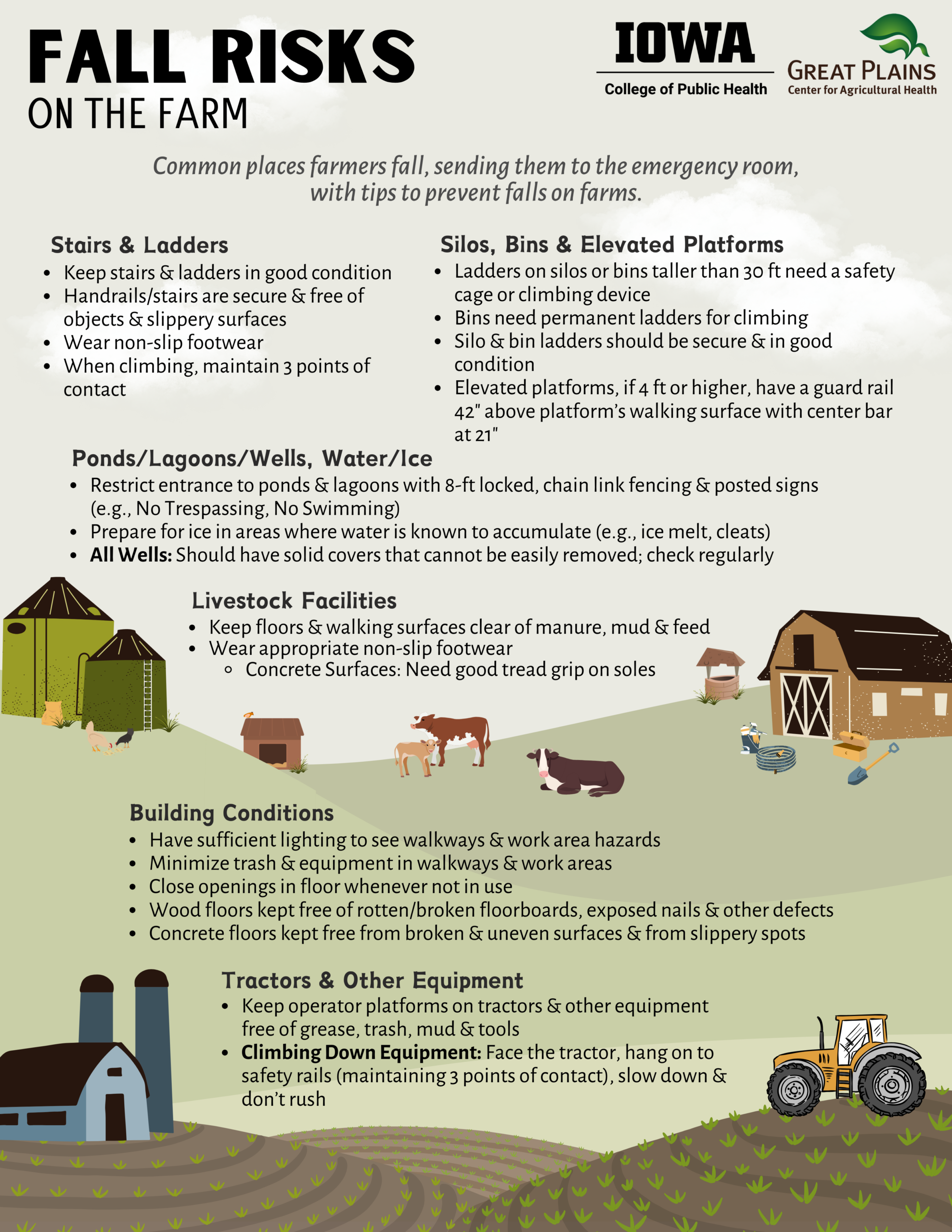
Fall Risks on the Farm
Dimensions: 11×17 and 8.5×11
This poster provides a practical guide to preventing falls on farms by identifying common hazards and offering targeted safety strategies. It emphasizes the importance of maintaining clean, stable working surfaces and using proper equipment to reduce the risk of injury.
Use as a reminder prior to site visits, before conducting new tasks on a farm, or to discuss injury prevention, in general.
Common Places Farmers Fall & Prevention Tips
Stairs & Ladders
-
- Stairs and ladders are kept in good condition
- Handrails and stairs are secure and free of objects and slippery surfaces
- Wear non-slip footwear
- When climbing, maintain three points of contact
Silos, Bins, and Elevated Platforms
-
- Ladders on silos or bins taller than 30 feet need a safety cage or climbing device
- Bins need permanent ladders for climbing
- Silo and bin ladders should be secure and in good condition
- Elevated platforms (if 4 feet or higher) have a guard rail 42 inches above the platform’s walking surface with a center bar at 21 inches
Ponds/Lagoons/Wells and Water/Ice
-
- Restrict entrance to ponds and lagoons with 8-ft, locked, chain link fencing and posted signs (e.g., No Trespassing, No Swimming)
- Prepare for ice in areas where water is known to accumulate (e.g., ice melt, cleats)
- All wells should have solid covers that cannot be easily removed and should be checked regularly
Livestock Facilities
-
- Keep floors and walking surfaces clear of manure, mud, and feed
- Wear appropriate non-slip footwear
- For concrete surfaces, wear footwear with good tread grip on soles
Building Conditions
-
- Have sufficient lighting to see walkways and work area hazards
- Minimize trash and equipment in walkways and work areas
- Close openings in the floor whenever not in use
- Wood floors are kept free of rotten and/or broken floorboards, exposed nails, and other defects
- Concrete floors are kept free from broken and uneven surfaces and from slippery spots
Tractors and Other Equipment
-
- Keep operator platforms on tractors and other equipment free of grease, trash, mud, and tools
- When climbing down equipment, face the tractor, hang on to safety rails (maintaining 3 points of contact), slow down, and don’t rush
Poster/Handout
Portable Ladder Safety
Dimensions: 11×17 and 8.5×11
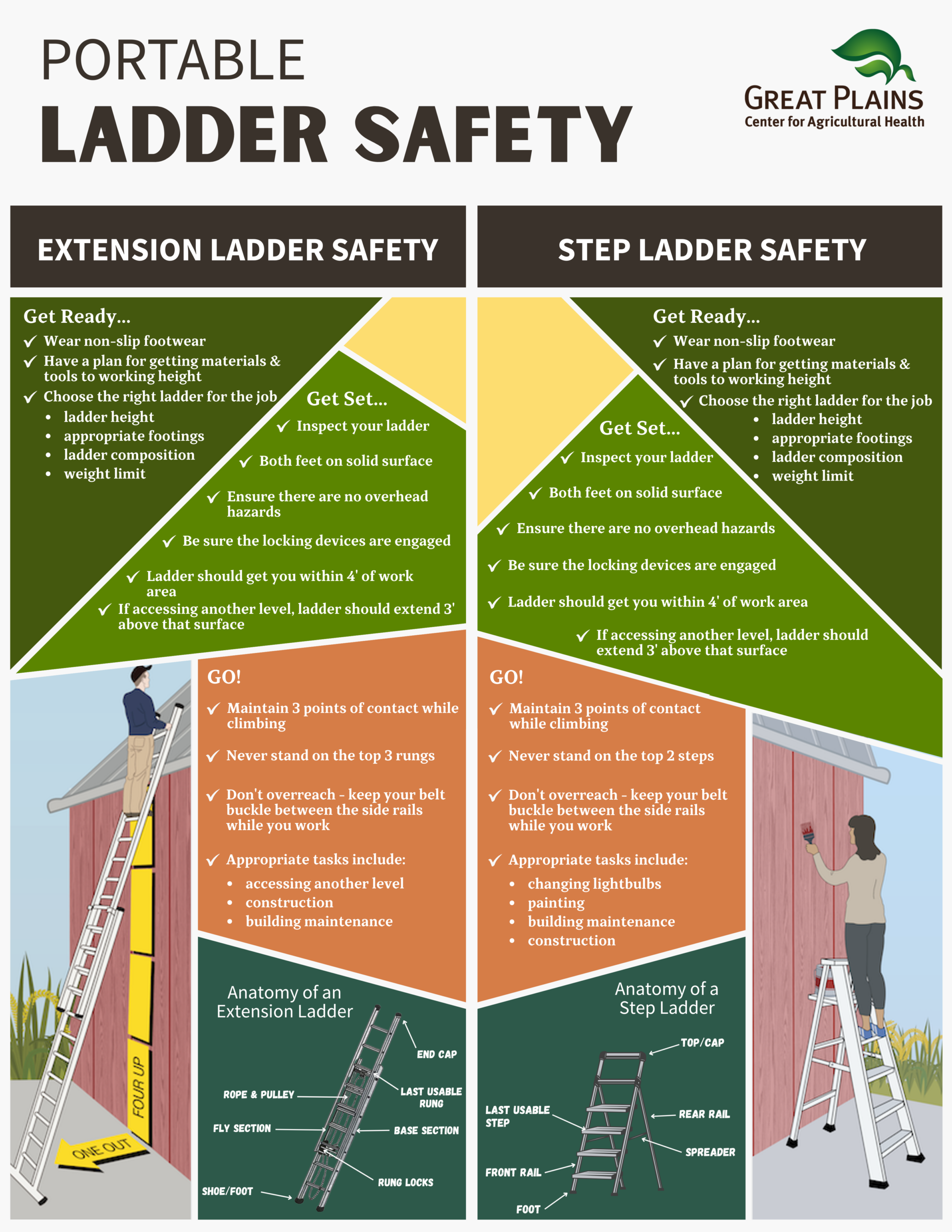
This poster is a portable ladder safety guide that walks users through how to safely choose, set up, and use ladders. It’s organized into three main stages:
1. “Get Ready” (Preparation)
Before using a ladder:
-
- Choose the right ladder for what you are doing (correct height, weight limit, and type)
- Make sure you have stable footing and the right ladder composition
- Wear non-slip footware
- Have a plan for safely lifting tools and materials when climbing the ladder
2. “Get Set” (Setup and Inspection)
Proper setup and safety checks include:
-
- Inspecting the ladder before use
- Making sure the locking devices are engaged
- Placing the ladder on a solid, stable surface
- Checking for overhead hazards
- Ensuring appropriate positioning:
- Ladder reaches within 4 feet of the work area
- Ladder extends 3 feet above a higher surface if accessing another level
3. “Go!” (Safe Use)
How to safely climb a ladder and work:
-
- Maintain 3 points of contact at all times
- Do not stand on the top rungs/steps
- Avoid overreaching—keep your belt buckle between the rails
- Only use ladders for appropriate tasks (e.g., maintenance, construction, light tasks like changing bulbs or painting)
Poster/Handout
Fall Prevention Tips: Winter Hazards
Dimensions: 11×17 and 8.5×11
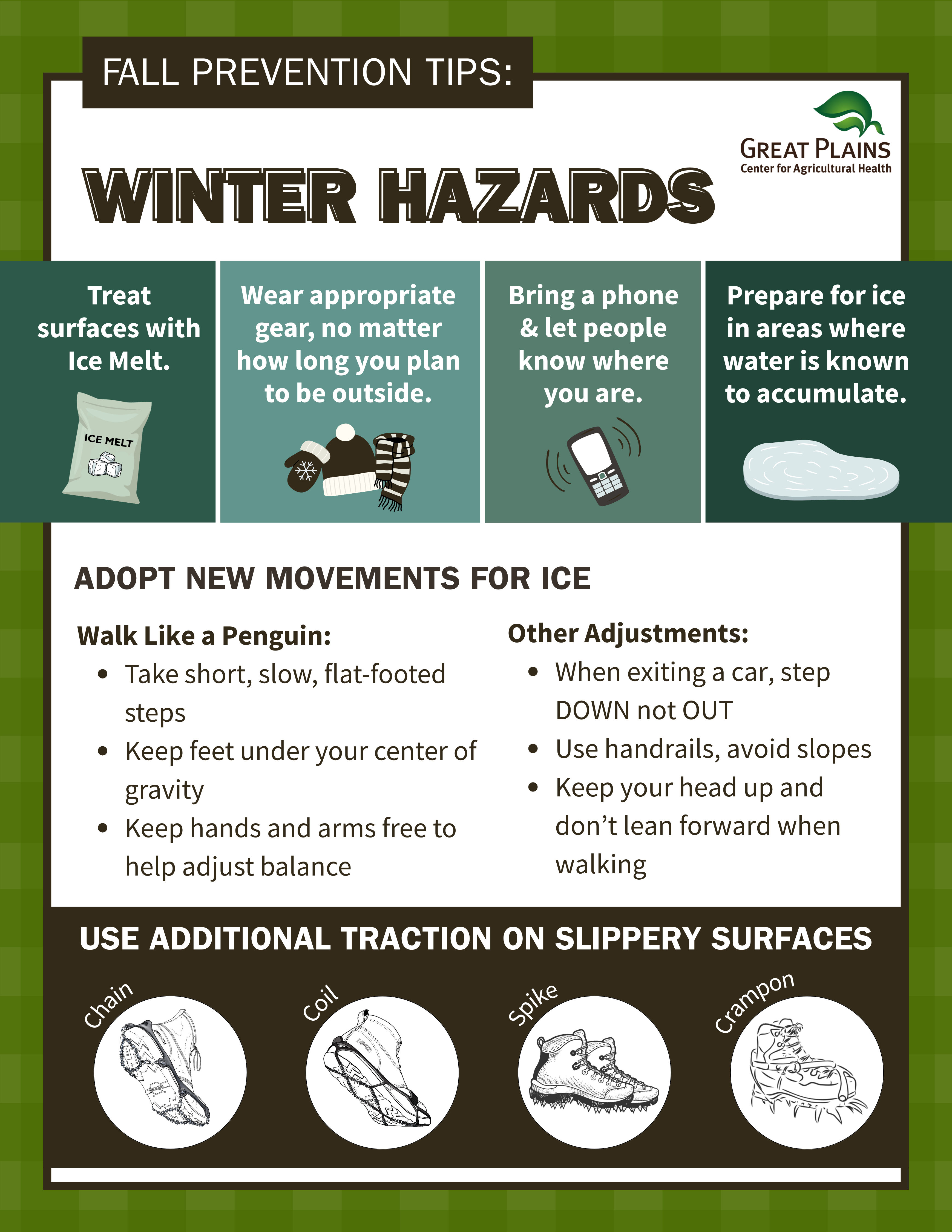
This poster focuses on preventing slips and falls during winter conditions, especially on ice and snow. It combines general safety tips with specific guidance for frozen surfaces.
Preventing Slips on Ice & Snow
-
- Wear appropriate winter gear and traction devices (like spikes or crampons)
- Use ice melt on walkways
- Be cautious in areas where water can freeze
- Carry a phone and tell someone where you’re going
How to Walk Safely on Ice (“Walk Like a Penguin”)
-
- Take short, slow, flat-footed steps
- Keep your center of gravity over your feet
- Keep hands free for balance
- Additional tips:
- Step down (not out) when exiting a car
- Use handrails and avoid slopes
- Keep your head up and avoid leaning forward
Safety on Frozen Water
-
- Check ice thickness before walking or driving on it
- Bring a safety kit (rope, dry clothes, whistle, hand warmers)
Measuring Ice Thickness:
-
- Use an ice auger to drill a hole
- Measure thickness with a tape or stick
- Check thickness every 10–15 feet as you move
General Ice Thickness Guidelines:
-
- ~4 inches: safe for one person
- 5–7 inches: snowmobiles/ATVs
- 8–12 inches: small cars
- 12–15 inches: larger vehicles (with caution)
- Less than 2 inches: unsafe
For more information and additional resources on Cold Weather Hazards, visit our topic page here.
Front Side
Back Side

Posters/Handouts – Set of 3
Preventing Slips, Trips & Falls
Dimensions: 11×17 and 8.5×11


Farm Safety
This poster focuses on preventing slips, trips, and falls in farm environments by identifying hazards and promoting safety practices.
Common Risk Factors
-
- Mounting and dismounting ladders, machinery, or equipment
- Wet, uneven, or slippery surfaces
- Weather conditions (rain, ice, mud)
- Height changes and slopes
- Working in barns, silos, or livestock areas
- Cluttered or poorly lit spaces
Key Prevention Tips
-
- Wear slip-resistant footwear with good traction
- Slow down on uneven ground, steps, and wet surfaces
- Use non-slip mats and clearly mark changes in floor height
- Keep work areas clean and pathways free of debris
Machinery & Equipment
This poster focuses on preventing slips, trips, and falls in farm environments when working with machinery and equipment by identifying hazards and promoting safety practices.
Common Risk Factors
-
- Climbing off tractors and large vehicles or machinery
- Climbing ladders on buildings, silos, bins and/or tanks
- Working with or around horses and livestock
- Carrying items while using steps or climbing ladders
Key Prevention Tips
-
- Clear work areas and steps of clutter and debris
- Stay focused on what you are doing and know your surroundings
- Never jump on or off moving tractors or machinery
- Pay attention to steps and use grab bars when available
Working at Heights
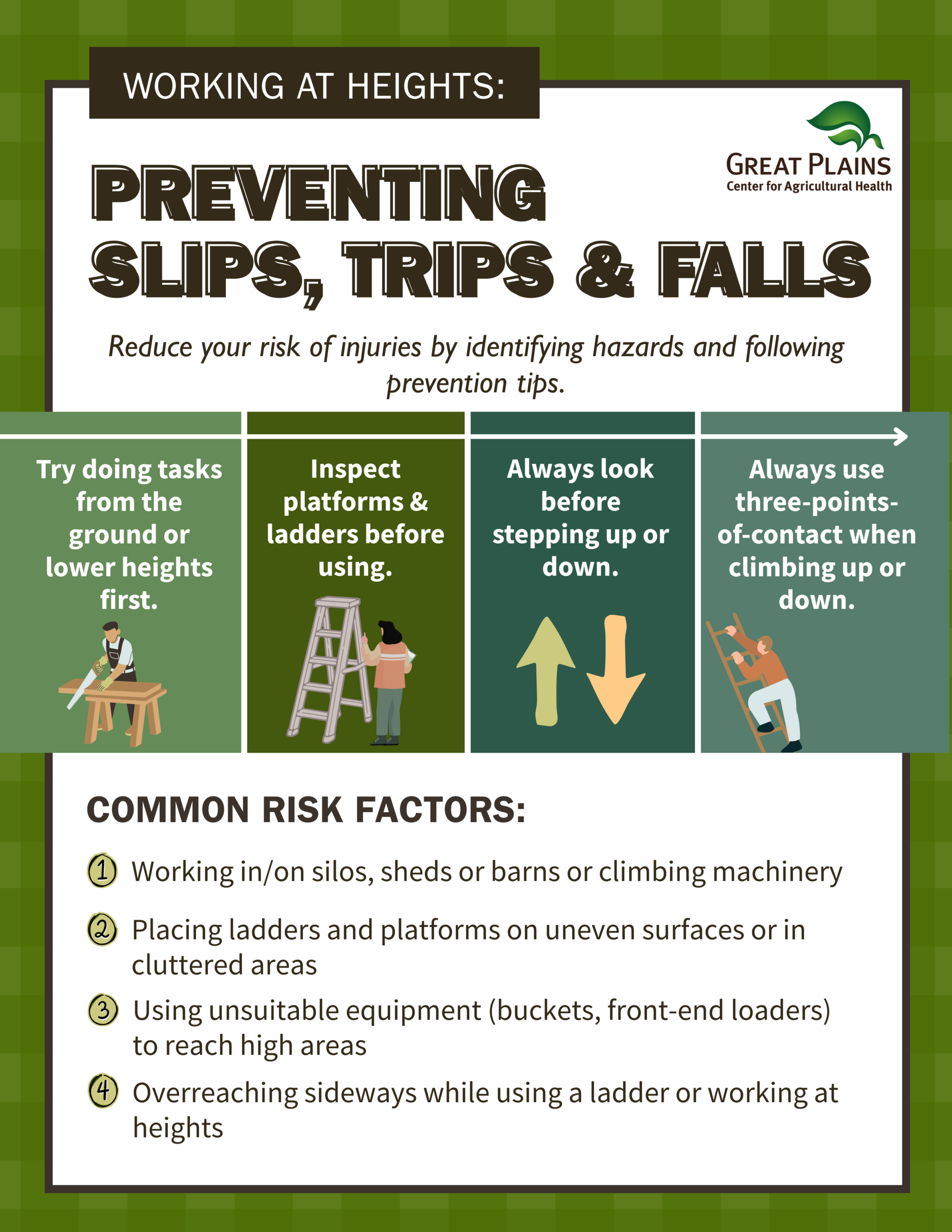
This poster focuses on preventing slips, trips, and falls in farm environments when working at heights by identifying hazards and promoting safety practices.
Common Risk Factors
-
- Working in or on silos, sheds or barns or climbing machinery
- Placing ladders and platforms on uneven surfaces or in cluttered areas
- Using unsuitable equipment (buckets, front-end loaders) to reach high areas
- Overreaching sideways while using a ladder or working at heights
Key Prevention Tips
-
- Try doing tasks from the ground or at lower heights first
- Inspect platforms and ladders before using
- Always look before stepping up or down
- Always use three-points-of-contact when climbing up or down a ladder
Resources for Health Care Providers – Wintertime Falls Prevention
Includes 4×6 postcard, trifold brochure, and four electronic poster/screen display options; located here
Additional Resources: Falls
Ag Health 101
Unit 9. Falls on Farms
The known vulnerabilities related to farm falls will be covered in this unit, with a focus on the medical and personal factors linked to both an increased risk of farm falls and an increased severity of their consequences. This unit will also highlight key hazards of falls and several preventative measures
Information from Unit 9. Falls on Farms was used to create the poster “Fall Risks on the Farm” (below). Listen to the audio lessons from Unit 9 of Ag Health 101, or view the Unit Summary for Falls on Farms, for more information on this topic.
FarmSafe Podcast
S4E4 | Falls on Farms: The Medication Connection
In this podcast, we delve into the issue of medication-related falls among farmers, highlighting the risks that medications pose when mixed with the physically demanding nature of farming. Our expert for this episode, Dr. Ryan Carnahan, is currently involved in various projects, including reducing the use of high-risk medications in older adults to prevent falls. Dr. Carnahan emphasizes the importance of regular medication reviews and understanding the side effects of medications.
S1E11 | Falls on Ice
In this episode, an Iowa rancher shares a story about falling on ice and hitting her head. She lists the things she always does now to try to prevent it from happening again. We also talk to Kathy Lee, RN, MSN, from the UIHC trauma program, about health outcomes associated with falls and strategies for preventing falls on ice.