
FIRST AID
Page Topics
Click on the topic below to jump to that section on this page.
General First Aid for Farms: Print Materials
Poster/Handout
Farm First Aid
Dimensions: 11×17 and 8.5×11
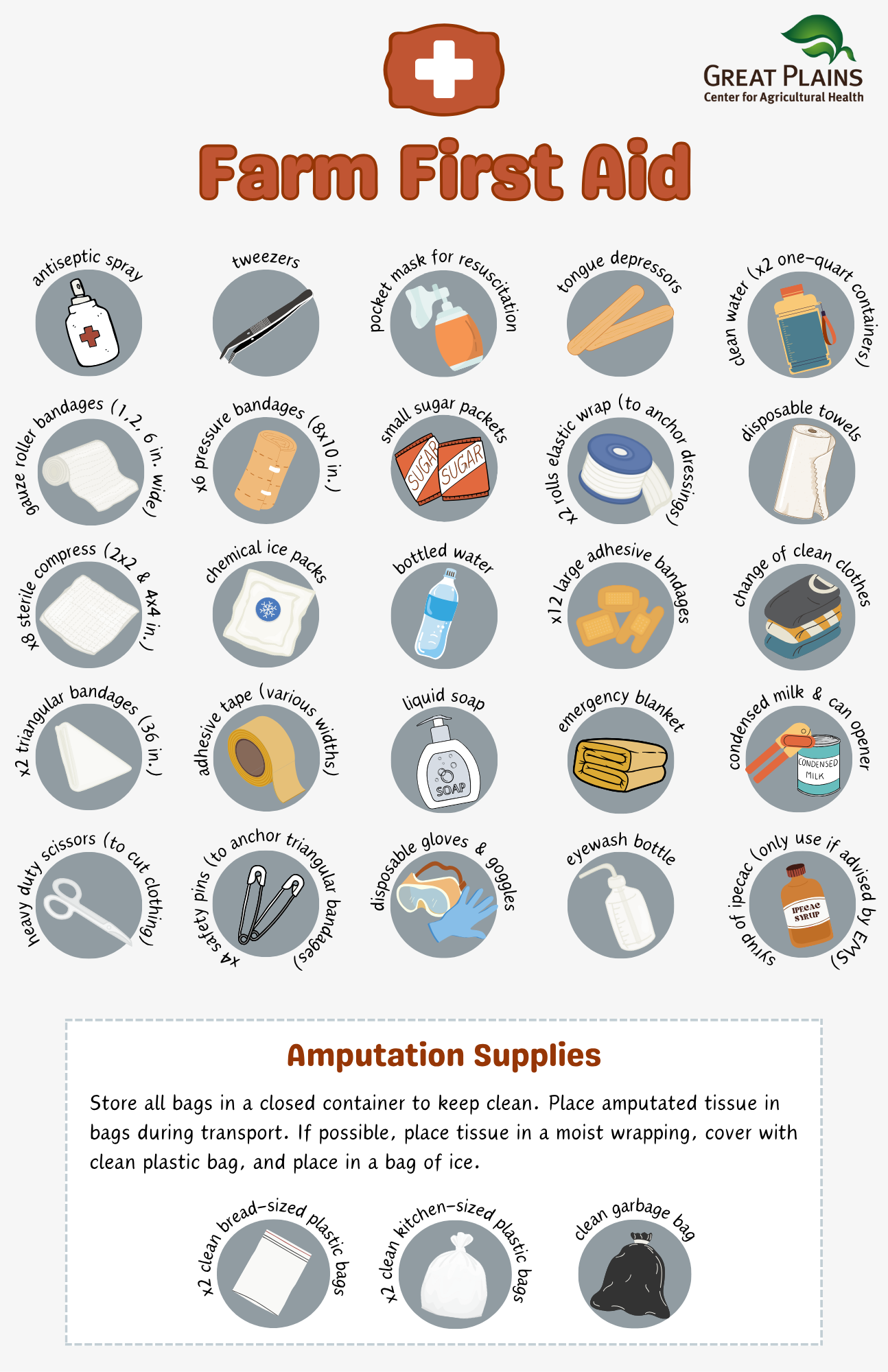
This poster provides an overview of the items to include in a first aid kit tailored to common injuries that may occur in a farm setting. Consider making several farm first aid kits to have in areas on your farm where injuries are more likely to occur (e.g., where chemicals are stored, in agricultural machinery).
A handout version of the Farm First Aid Poster. This handout can be used in the field when discussing first aid kits with agricultural workers.
Specialty Kits
Sometimes, there is farm work that requires specific supplies to be included in emergency kits to be prepared (major trauma, fractures, severed limbs, poisoning). In Iowa, the most prominent farmer injury outcome among farmers requiring hospitalization is fractures (56%). Amputation accounts for about four percent of injury outcomes among farmers requiring hospitalization.
Amputations
-
- one large plastic bag (trash can size)
- 4 medium plastic bags (tall kitchen size)
- store all bags in a closed container to keep as clean as possible.
Amputated tissue should be placed in bags during transport. If possible, place tissue in a damp wrapping, cover with a clean plastic bag and place over ice.
Fractures
For immobilizing injured limbs, include:
-
- wooden or plastic splints (1x3x12-15)
- roll of elastic wrap (to attach limb to splint)
Dressing Supplies
To handle major trauma, include:
-
- sterile compress (2×2 and 4×4 inches)
- guaze roller bandages (1, 2, and 6 inches wide)
- adhesive tape (various widths)
- triangular bandages
- tongue depressors
- heavy duty scissors (for cutting clothing)
- ice packs (chemical)
- small sugar packets
- disposable rubber gloves
- goggles
- soap
- bottled water (if you are in a heated area)
- tweezers
- safety pins
- pocket mask for resusitation
- emergency blanket
- antiseptic
Poisoning
Keep the following supplies where harmful substances are stored. Also include the following in your emergency kit during pesticide application season:
-
- emergency and/or poison control center phone number
- syrup of Ipecac (should only be used if advised to by the Poison Center)
- two one-quart containers of clean drinking water
- tongue depressors (to stir with or to use during a seizure)
- two small, plastic empty jars with tight-fitting lids
- can of evaporated milk and can opener
- blanket (for treating shock)
- plastic bandages and tape (to cover contaminated areas)
- disposable rubber gloves
- goggles
Additional Resources: General First Aid for Farms
FarmSafe Podcast
S3E11 | General Farm Emergency Preparedness
This episode focuses on emergency preparedness on the farm. We talked with extension educator and dairy farmer, Emily Krekelberg, about general tips that can help farmers plan for emergency situations. During the episode, we share information on the key pieces of information that should be gathered to construct an emergency action plan that covers weather-related events and other scenarios, such as entrapments or medical emergencies.
Fire Safety: Print Materials
Poster/Handout
First Aid for Burns
Dimensions: 11×17 and 8.5×11
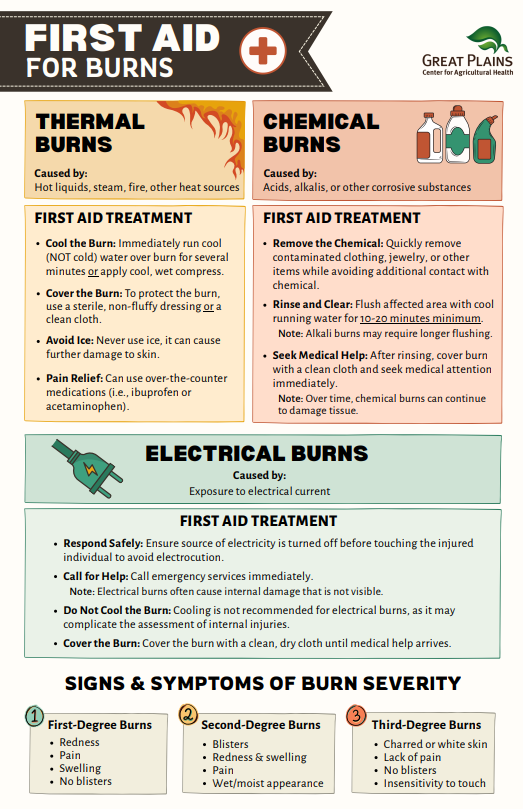
The poster is a quick-reference guide for identifying and treating different types of burns, especially in farm or field settings.
Ag Educators: Use this poster in the classroom to teach students about first aid for burns.
Farmers: Post around your farm for a quick reminder of first aid steps for burns.
A handout version of the First Aid for Burns Poster. This handout can be used in the field when discussing first aid with agricultural workers.
General First Aid Guidance Based on Burn Type
Thermal Burns (hot liquids, steam, fire, other heat sources)
-
- Cool the Burn: Immediately run cool (NOT cold) water over the burn for several minutes or apply a cool, wet compress.
- Cover the Burn: To protect the burn, use a sterile, non-fluffy dressing or a clean cloth.
- Avoid Ice: Never use ice, as it can cause further damage to the skin.
- Pain Relief: Can use over-the-counter medications, such as ibuprofen or acetaminophen.
Chemical Burns (acids, alkalis, or other corrosive substances)
-
- Remove the Chemical: Quickly remove contaminated clothing, jewelry, or other items while avoiding additional skin contact with the chemical.
- Rinse and Clear: Flush the affected area with cool running water for 10-20 minutes minimum.
- NOTE: Alkali burns may require longer flushing.
- Seek Medical Help: After rinsing, cover the burn with a clean cloth and seek medical attention immediately.
- NOTE: Over time, chemical burns can continue to damage tissue.
Electrical Burns (exposure to electrical current)
-
- Respond Safely: Ensure the source of electricity is turned off before touching the injured individual to avoid electrocution.
- Call for Help: Call emergency services immediately.
- NOTE: Electrical burns often cause internal damage that is not visible.
- Do Not Cool the Burn: Cooling is not recommended for electrical burns, as it may complicate the assessment of internal injuries by medical professionals.
- Cover the Burn: Cover the burn with a clean, dry cloth until medical help arrives.
Recognizing Burn Severity (Degrees)
First-degree
-
- Redness, pain, swelling
- No blisters
Second-degree
-
- Blisters, redness, swelling
- Moist/wet appearance, painful
Third-degree
-
- Charred or white skin
- Little or no pain and insensitivity to touch (due to nerve damage)
- No blisters
Additional Resources: Fire Safety
FarmSafe Podcast
S4E11 | Farm Burn Basics: First Aid for the Field
This episode discusses fire safety and first aid procedures, particularly relevant to farm settings. A key takeaway is the importance of prevention in avoiding injuries and fires. Our expert, Pittsville Fire Chief, Jerry Minor, emphasizes a proactive approach, encompassing proper equipment, training, and building awareness for employees and the entire family. The discussion highlights the importance of proactive safety measures in preventing and responding to fires and injuries on farms.
S4E3 | Burning Issues: Fire Safety on the Farm
In this episode, we’re joined by Fire Chief Jerry Minor, who shares invaluable insights on fire safety and prevention specifically tailored for farms. With years of experience in fire management, Jerry Minor discusses the unique fire risks that farmers face and offers expert advice on how to minimize those dangers. From understanding the importance of proper equipment maintenance and fire-resistant materials to creating fire safety plans and emergency response strategies, this episode covers everything you need to know to keep your farm safe. Whether you run a small family farm or a large operation, these practical tips will help protect your land, animals, and livelihood from the threat of fire.
Poisoning: Print Materials
Poster/Handout
First Aid for Poisoning
Dimensions: 11×17 and 8.5×11
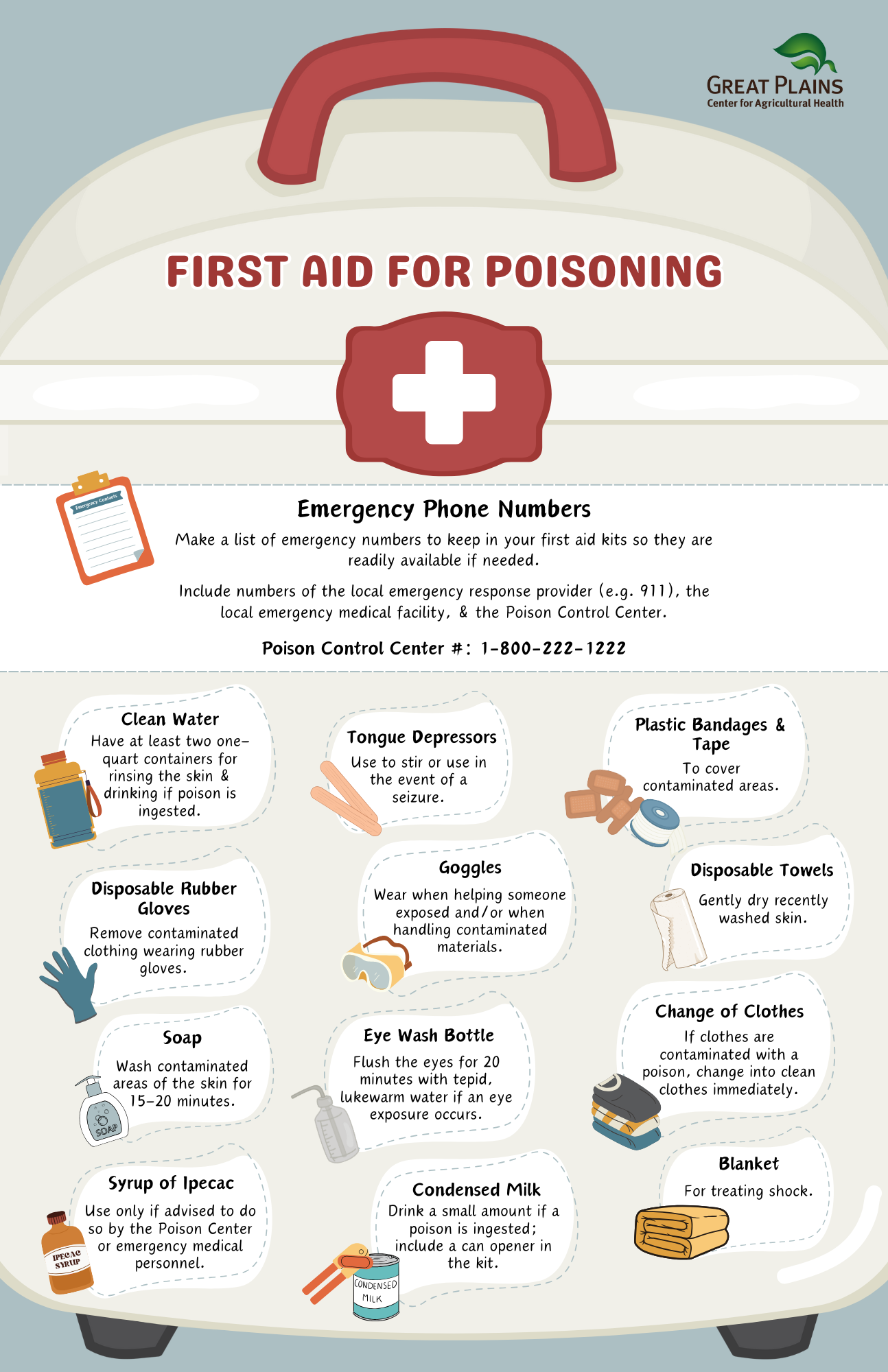
This poster provides the first aid supplies necessary to address a poison exposure while waiting for emergency services to arrive.
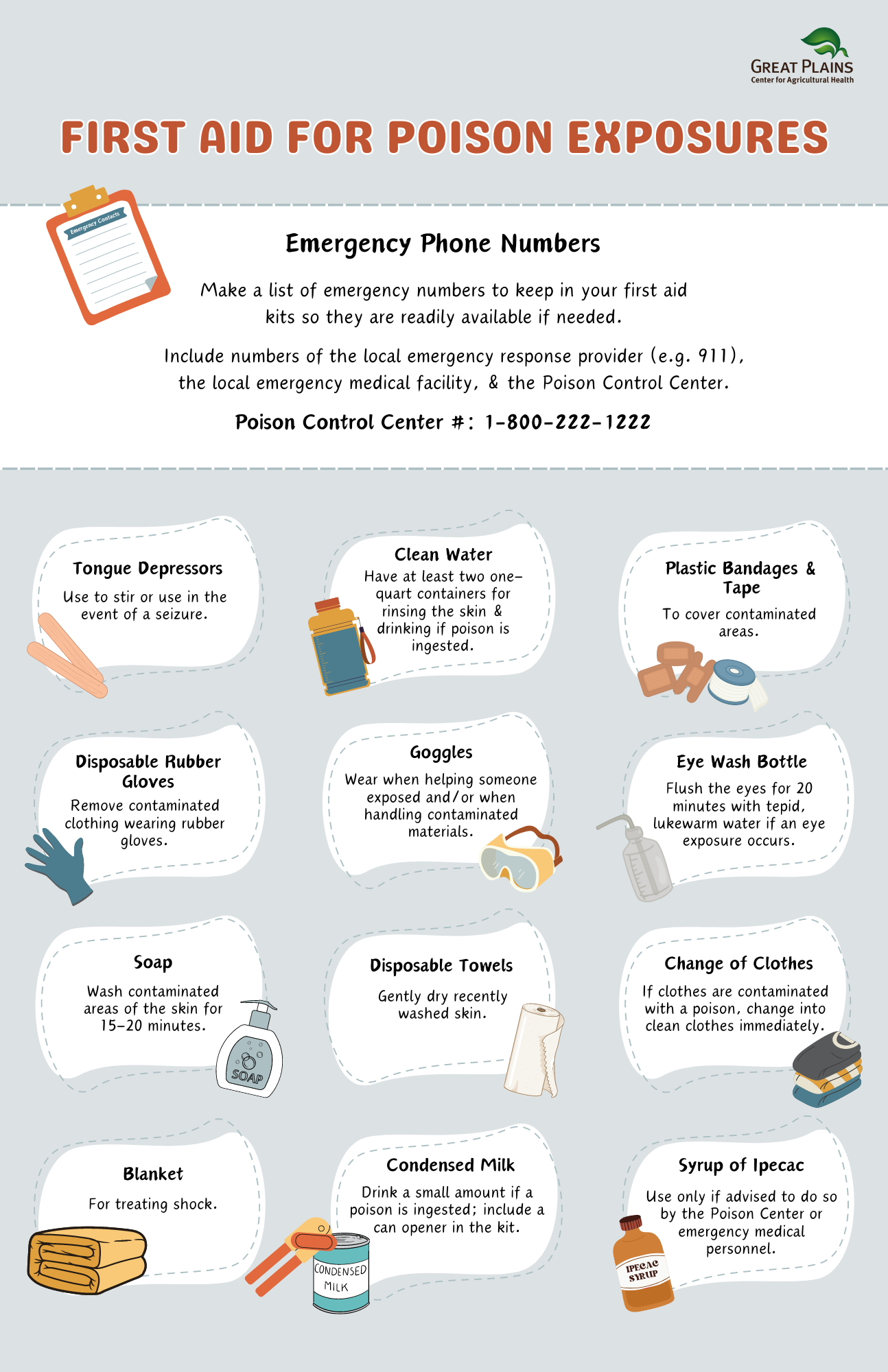
A handout version of the First Aid for Poisoning Poster, with a slightly different format and design.
First Aid Supplies for Poisoning
Keep the following supplies where harmful substances are stored. Also include the following in your emergency kit during pesticide application season:
-
- syrup of Ipecac (should only be used if advised to by the Poison Center)
- two one-quart containers of clean drinking water
- tongue depressors (to stir with or to use during a seizure)
- two small, plastic empty jars with tight-fitting lids
- can of evaporated milk and can opener
- blanket (for treating shock)
- plastic bandages and tape (to cover contaminated areas)
- disposable rubber gloves
- goggles
You should also include a list of emergency phone numbers in your emergency kit so they are readily available if needed. Include the contact information for your local emergency response provider (e.g., 911), the local emergency medical facility, and the Poison Control Center (1-800-222-1222).
Additional Resources: Poisoning
FarmSafe Podcast
S3E9 | Poisons, Part 1: Exposure Prevention
This episode is airing two weeks before National Poison Prevention Week (March 17-23rd). This is the first episode in a two-part conversation on poisoning exposure prevention, which is today’s episode, and poisoning exposure response on the 20th. Tammy Noble from the Iowa Poison Control Center will be guiding us through this topic.
S3E10 | Poisons, Part 2: Exposure Response
This episode was released during National Poison Prevention Week in 2024. Tammy Noble from the Iowa Poison Control Center is back this week to answer more of our poison questions.